Ads 468x60px

Ads

Comments

Social Icons

Showing posts with label iphone 6. Show all posts

Sunday, May 25, 2014

HTC One M8

HTC One M8
HTC One M8
HTC One M8 What to say about the HTC One M8? They often say the second album is the hardest, but the follow up to the all-conquering HTC One takes the best of that phone and yet still re-invents things enough to make it a massive recommendation over the old model. We love the speed of the camera, the Duo Camera is smart as a tack, the Boomsound upgrade is impressive and the design... well, you have to hold it. The Snapdragon 801 processor has boosted battery dramatically compared to the 600 of last year, and that means that photos also process much more quickly as well - even the front-facing camera is much better. Gaming, movies, photography, browsing all work really well, and in a phone that that's easily going to destroy whatever anyone else can design, unless Apple or LG have got some dark sorcery up their sleeves when the iPhone 6 or LG G3 appear later in the year. Quick Verdict If we were to criticise the One M8, it would be the camera's lack of a megapixel upgrade, which means pictures are a little less sharp than they might otherwise be. That said, it's a minor point in a phone that has barely any flaws. The lower megapixel camera means faster shutter speeds, and if you don't want to zoom in a lot, most will enjoy the depth perception and background de-focus ability to make some pro-looking snaps. We urge you to hold this phone for a few seconds and try not to feel at least a small flicker of smartphone attraction. It's got great specs, a splendid design and some clever hardware innovation where the competition is relying on software to do the same thing. The Samsung Galaxy S5 and the Xperia Z2 failed to take the top spot, and we honestly don't know if the iPhone 6 will be good enough to head straight to the top of the pile when it appears? It looks like you're going to be spoilt for choice in 2014. HTC One M8 review Compare the best HTC One M8 deals

News Source : www.techradar.com

Tuesday, May 14, 2013

Sony Xperia SP Latest Model in U.S.

Sony Xperia SP Latest Model in U.S.

Sony Xperia SP Latest Model in U.S.

We’ve been bringing you plenty of news about the Sony Xperia SP smartphone and today we have details on how to get this Android device unlocked in the US. The Xperia SP is now available to pre-order online through Sony’s website and would be a good choice for those on AT&T or T-Mobile. Sony has released some great phones lately and we’ll give you a quick recap of some of the Xperia SP’s specs. It’s powered by a 1.7GHz Qualcomm Snapdragon Pro dual-core processor, has a 4.6-inch 720p HD display with 319 ppi , 1GB of RAM and 8GB of internal storage, expandable via microSD up to 32GB. It also has an 8-megapixel Exmor HD rear camera with autofocus, LED flash and 1080p video capture as well as a front-facing VGA camera. Other specs for the Sony Xperia SP include a 2300 mAh battery for around 10 hours of talk time or 635 hours of standby time, NFC, Bluetooth 4.0 and LTE connectivity (where applicable) and it all runs on the Android 4.1 Jelly Bean operating system. This is only compatible for GSM carriers, in other words for the US that’s T-Mobile or AT&T. If you want to pre-order this smartphone, head to the Sony product page here where it’s available in black or white color options. The price is $489 unlocked and shipping should begin on May 20 although sometimes these dates can shift. Are you intending to purchase the Sony Xperia SP? What are your thoughts for Sony’s price for the unlocked phone? Let us know by sending your comments. 

News Source :   www.phonesreview.co.uk

Saturday, May 11, 2013

Sony Xperia Tablet S Getting Android 4.1.1 Jelly Bean Update Starting TodayJelly Bean Update Starting Today

Sony Xperia Tablet S Getting Android 4.1.1 Jelly Bean Update Starting Today

Sony Xperia Tablet S Getting Android 4.1.1 Jelly Bean Update Starting Today

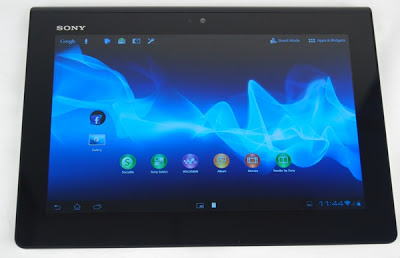
Before bringing the Xperia Tablet Z to light, which is arguably the best ever non-Nexus Android tablet, Sony has had to experiment for a while, releasing several mediocre slates. The last of the bunch has been the Xperia Tablet S, launched in September 2012 and received with mixed “critical” reviews and lukewarm popular enthusiasm. Sony-Xperia-Tablet-S But the Tab S is to become far more attractive than ever, as Sony will be rolling out an Android 4.1.1 Jelly Bean update for it starting today. According to a post on Sony’s Community Forums, the upgrade will be “pushed out to our production server on April 18th 2013 between 9 am – 10 am pacific standard time”. Naturally, you shouldn’t go berserk if the update won’t hit your particular Xperia Tablet S by 10 AM today, given that these things can take anywhere between a day and a few weeks to reach all users. For now, the JB release is meant specifically for folks in the United States, Canada and Latin America, but chances are European Tablet S owners will get it in a matter of weeks as well. Before grabbing the juicy new software pack, remember to make sure you’re connected to a stable Wi-Fi network and your battery is above the 50% mark. We don’t know exactly how heavy this particular package is, but be sure to arm yourselves with patience, because the downloading and installing of Jelly Bean can take up to 90 minutes. As for tweaks, bumps and enhancements, you can expect to get Google Now integration, a much smoother UI, expandable notifications, Project Butter performance upgrades and plenty of other goodies. A bunch of bug fixes are to come your way too, not to mention improvements to Wi-Fi stability and a battery life boost. Be sure to go to Settings – About tablet – System Update if the automatic prompt message to download and install is delayed, but again, try to keep calm if the first wave of 4.1 updates will dodge you. Finally, if you’re not an Xperia Tablet S owner and wonder if the 10-incher is worth your attention now that it’s Jelly Beaned, know that the thing starts at $330 on Amazon, which is not too shabby. For that money, you’ll be getting a quad-core Tegra 3 CPU, 1 GB of RAM, a 6,000 mAh battery, 16 GB of internal memory, microSD support, an 8 MP rear-facing cam and a 1,280 x 800 pix res splash-proof display.

News Source :   www.thedroidguy.com

Sony Xperia Tablet Z Scheduled for Release on May 24

Sony Xperia Tablet Z Scheduled for Release on May 24

Sony Xperia Tablet Z Scheduled for Release on May 24

The U.S. release of the Sony Xperia Tablet Z is now scheduled to happen in a few weeks. This will bring this high-end Android model to the U.S. on schedule. Sony Xperia Tablet ZIt was unveiled in January at CES, and at that time Sony promised that the device will be available in America in the spring. The company appears close to making that self-imposed deadline. The U.S. Sony Store is taking pre-orders for the Tablet Z now, and says these will begin to ship close to Friday, May 24. There are two versions: one with 16GB of internal storage is $500, while the 32GB version is $600. Those who purchase the 32GB version in a white casing will receive a free cradle. More About the Sony Xperia Tablet Z Sony claims this device, which debuted in Japan in March, is the slimmest tablet in the world at just 0.27 inches (6.9mm). It is a full-size tablet with a 10.1 inch touchscreen at a 1920 x 1200 pixel resolution. It is water and dust-resistent (IP55 & IP57). The Xperia Tablet Z runs Android 4.1 (Jelly Bean) on a 1.5GHz quad-core Qualcomm Snapdragon S4 processor with 2GB of RAM. It includes 16GB of internal storage, and a microSD slot to add additional capacity. An upgrade to Android 4.2 has been promised. Other features include 4G LTE, Wi-Fi, Bluetooth, GPS, and NFC. There is an 8 megapixel rear camera and a 2 MP front one. It even features an IR port to allow it to be used as a universal remote.

News Source :  www.tabletpcreview.com

Sony Xperia Tablet S (3G) Splash-proof Xperia Tablet

Sony Xperia Tablet S (3G)  Splash-proof Xperia Tablet

Sony Xperia Tablet S (3G)  Splash-proof Xperia Tablet

Announced at IFA 2012, the Xperia Tablet S (3G) is the first tablet from Sony under the Xperia branding that's also used for its smartphone portfolio (with the most recent addition being the recently announced Xperia Z full HD screen mobile phone). However, this is not the first Sony tablet; we've seen the Sony Tablet S in October 2011 and the Tablet P in March last year. Both tablets are designed to stand out from the crowded tablet market with their unique designs; the Tablet S has a unique fold design that helps in the usability and handling of the tablet while the Tablet P adopts a clamshell form factor that combines two 5.5-inch screens. No prizes for guessing which form factor and predecessor the Sony Xperia Tablet S hails from. Despite its similar appearance to the original Tablet S, the Xperia Tablet S boasts notable new features to stay relevant. Before we dive into the review, here's a quick look at its specs: - Sony Xperia Tablet S Key Highlights of the Sony Xperia Tablet S (3G) Android 4.0.3 Ice Cream Sandwich 9.4-inch TFT LCD / 1280 x 800 pixels NVIDIA Tegra 3 quad-core 1.4GHz processor 1GB RAM 16GB internal memory SD memory card slot (supports up to 128GB) 8-megapixel rear camera 1-megapixel front facing camera 6000mAh battery 585g 239.8 x 174.4 x 8.8 - 11.85mm Price and availability: RM1,799 at all Sony stores and authorized outlets Design The front face of the tablet looks similar to the original Tablet S, with the 9.4-inch display surrounded by a rather thick black bezel. The extra space could be better used to increase the screen size to perhaps 9.7 inches across, but we feel Sony wants to minimize the possibility of Apple hurling lawsuits at it for infringing on its design patents. For some users, especially those with larger hands, the added bezel space comes in handy for better handling of the device while in active use since you're unlikely to touch the active portion of the screen. The Sony Xperia Tablet S has an unconventional display size of 9.4 inches, while most Android tablets of its class have 10.1-inch displays The unique fold design at the back of the tablet finds its way back onto the Xperia Tablet S, although the curve and thickness is less pronounced. As a result, the display is no longer elevated to the extent where viewing angle and typing experience was supposedly better as was advertised on the old Tablet S. The curved edge still maintains the dotted texture, which helps to provide a better grip of the table in portrait mode.Overall, the handling of the Xperia Tablet S is good due to its rather lightweight form factor (585g) and its slimmer fold design. Here's the comparison with other tablets of its class: Apple iPad 4 (cellular) - 662g ASUS Transformer Pad Prime (Wi-Fi) - 586g Samsung GALAXY Note (10.1) (cellular) - 600g Toshiba REGZA Tablet AT300 (cellular) - 595g The folding design is less pronounced on the Sony Xperia Tablet S. Embedded at the corner is a flashing green light that alerts you to any notification. Sony kept the design of the Xperia Tablet S as minimalist as possible, and limits buttons and ports to the two sides of the device. On the right of the Xperia Tablet S are the Power button and volume controls. You can find the 3.5mm audio output jack, SD memory card slot and SIM card slot on the left. It takes a little practice to learn how to remove the SIM card tray from the Sony Xperia Tablet S As you can see from the image above, the 3.5mm audio output jack is not covered or protected by a plastic cover. Sony claims that the Xperia Tablet S has a splash proof design but we wonder if there is a chance that water might seep into the tablet via the 3.5mm audio output jack. The Sony Xperia Tablet S unfortunately doesn't use a more universal microUSB port and instead requires users to rely on a proprietary port for charging and data transfer on-the-go. Note the two speakers that flank the proprietary port.

Tuesday, May 07, 2013

Samsung Galaxy S4 DUOS

Samsung Galaxy S4 DUOS

Samsung Galaxy S4 DUOS

Samsung has just started to push Galaxy S4′s DUOS (GT-I9502) firmware to the KIES server as the device is soon going to be launched in various countries. Samsung always releases the firmware before the device itself and it’s the same case with the Galaxy S4 DUOS, as well. The firmware is based on Android 4.2.2 Jelly Bean with Samsung’s Nature UX 2.0 running on top of it. Currently, Samsung has only released the firmware for China, we hope other countries to follow soon. Firmware Details: Android Version: 4.2.2 – Build JDQ39 PDA: I9502ZNUAMDG CSC: I9502CHUAMDG MODEM: I9502ZNUAMDF Build Date: April 17 Changelist: 482199 The Galaxy S4 DUOS (GT-I9502) firmware is available for download from our Firmware Section. Now as the official firmware have been released, it’s going to rain custom ROMs and custom kernels for the Galaxy S4 DUOS (GT-I9502).

News Source :   www.sammobile.com

Monday, May 06, 2013

Samsung Galaxy Note 8.0 N5100

 Samsung Galaxy Note 8.0 N5100

 Samsung Galaxy Note 8.0 N5100

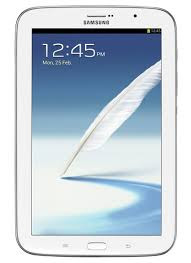
South Korean technology giant Samsung launched a new tablet to its existing gadget lineup. The Samsung Galaxy Note 8 N5100 offers voice calling, 3G and 4G support. Samsung has also launched another version without any of these features. OS & Processor This tablet runs on Android 4.1.2 Jelly Bean OS and it is powered by a 1.6 GHz quad core Exynos processor. The 2 GB RAM loaded in the Samsung Galaxy Note 8 helps in smooth multitasking and performance. Hardware Like the name indicates, the Samsung Galaxy Note 8 is a tablet with an 8-inch display screen. The display screen of this device has a resolution of 1280 x 800 pixels. This device weighs 338 grams and it measures 8 mm in thickness. It also comes loaded with a 4600 mAh battery. Camera & Memory The 5 MP primary camera looks pretty decent for a tablet. This camera is aided by supporting features like autofocus and digital zoom. A 1.3 MP secondary camera is also available in this device. The Samsung Galaxy Note 8 comes with 16 or 32 GB internal memory variations. The external memory is expandable up to 64 GB. Media & Connectivity This tablet comes with multimedia features preloaded in it. The Samsung Galaxy Note 8 N5100 supports multiple network platforms like 2G, 3G, 4G and WiFi etc. Voice calling facility is also available in this tablet.

News Source :  www.mobiles.sulekha.com

HTC Primo

HTC Primo

HTC Primo

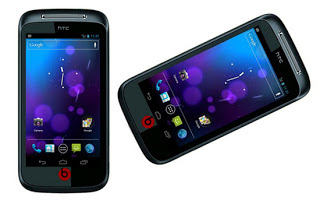
With all the reputed telecommunication companies are fighting hard with their smartphones the competition is getting tougher and tougher as many reputed companies releasing their latest Android smartphone and making the competition even tighter. Leading the way is the very renowned telecom company HTC. HTC has launched its new smartphone named as HTC PRIMO. The Detailed specifications of this phone are as follows: FEATURES AND SPECIFICATIONS: OPERATING SYSTEM: HTC PRIMO works on the android platform of version of Android OS, v4.0 (Ice Cream Sandwich). HTC PRIMO has the CPU of Dual Quad-core 1 GHz processor and has the chipset of configuration of Qualcomm and has the GPU of Andreno 220. HTC PRIMO has many more amazing features. NETWORK ANALYSIS: The New Unlocked HTC PRIMO supports 2G and 3G network with 2G configuration as GSM 850 / 900 / 1800 / 1900 and 3G configuration of HSDPA 900 / 2100. HTC PRIMO is released by the company in 2011 and will be available soon in 2012. SIZE/DISPLAY ANALYSIS: HTC PRIMO has got the dimensions of 122 x 64 x 9.2 mm and weighs 146 g (Expected). This phone has got very sleek design and has a very amazing and most importantly the designer look. Moreover, HTC PRIMO has got the 3.7 inches wide Super AMOLED capacitive touchscreen, with 16M colors and has the screen resolution of 720 x 1280 pixels. This phone has got the additional features of Multi-Touch. MEMORY ANALYSIS: HTC PRIMO comes with the support for practically unlimited entries for phonebook with photocall and also for the call records. HTC PRIMO comes with the internal memory of 512 MB RAM. However the good thing about this Tablet is that it does have the card slot support for microSD. DATA ANALYSIS: HTC PRIMO comes with the inbuilt EDGE support of class 12 and GPRS support of Class 12 (4+1/3+2/2+3/1+4 slots), 32 - 48 kbps (which is however is not revealed by the company).This phone also support 3G network of HSDPA, 21 Mbps; HSUPA, 5.76 Mbps. It also supports the Wi-Fi Connectivity of Wi-Fi 802.11 b/g with Wi-Fi hotspot and comes with the USB slot for the support of microUSB v4.0. HTC PRIMO also supports Bluetooth Connectivity of v4.0 with A2DP and EDR. CAMERA ANALYSIS: HTC PRIMO is equipped with the powerful primary camera of 5 MP with the resolution of 2592х1944 pixels with features like Carl Zeiss optics, autofocus, dual-LED flash The camera of HTC PRIMO also supports features like Geo-tagging, face and smile detection and enable video recording .However the suspense over the secondary camera is still maintained by the company as it does not reveled whether it has secondary camera or not. And with this HTC PRIMO has completed the desired modification with its Tablet Range. ADDITIONAL FEATURES: HTC PRIMO has many much more for you as its features are ready to serve you with the amazing mobile experience. HTC PRIMO has got inbuilt HTML, Adobe Flash browsers and has Accelerometer sensor, proximity sensor and compass. It also supports messaging via SMS (threaded view), MMS, Email and IM. HTC PRIMO also have inbuilt Stereo FM radio with RDS and support the GPS via A-GPS support. The most astonishing feature of HTC PRIMO is that its support JAVA via Yes, MIDP 2.1.


Sunday, May 05, 2013

Samsung Galaxy Tab 3 7.0 P3210

Samsung Galaxy Tab 3 7.0 P3210

Samsung Galaxy Tab 3 7.0 P3210

Samsung Samsung Galaxy Tab 3 7.0 P3210 este o tableta mid-range, echipata cu un display de 7 inch TFT cu touchscreen capacitiv, ce suporta o rezolutie maxima de 600 x 1024 pixeli si 16M de culori. Sistemul de operare folosit este Android 4.1 Jelly Bean, alaturi de un procesor dual-core de 1.2 Ghz. Pe langa acestea, Samsung Samsung Galaxy Tab 3 7.0 P3210 mai dispune si de alte functii precum GPS, Wi-Fi, Bluetooth si USB.


News Source : www.gsmland.ro

Samsung Galaxy Tab 3 7.0 P3200

Samsung Galaxy Tab 3 7.0 P3200

Samsung Galaxy Tab 3 7.0 P3200

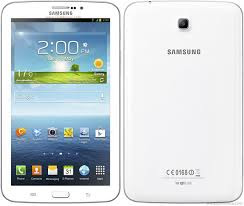
Coming next in the series of successful launches of smart phones, by the South Korean Multinational Firm, is the name of post-modern Samsung Galaxy Tab 3 7.0 P3200. It has been announced in April, 2013 and will be released in May of the same year, so you do not have to wait much longer! The device is furnished with the latest features that any advanced tablet can have, viz. MMS, SMS, GSM voice communication, SIM support, E-mail, Push Mail, IM, multi-touch screen, and so on. An additional feature of the device is the Android v4.1 (Jelly Bean) OS (Operating System). Before going deeper into distinguishing aspects of this smart device, let’s have a brief description of its body dimensions that measure 7.40, 4.37, and 0.39 inches in length, width, and thickness/height, respectively. Because of this size and structure, it comfortably fits in your palm while operating it. The mass of 306 grams offers an ideal combination of weight-to-body size that is convenient to carry and easy to hold. The TFT capacitive multi-touch screen is easier to work with than the old models in the series. The 16M colors provision in it enables you enjoy excellent video quality, because increasing the number of colors in a device enhances the spectral elegance of the display. The loudspeaker option lets you take delight in open-voice, high quality and clear music listening, but it is also supplied with 3.5mm jack for using hands-free, or connecting to any other stereo system. For the sake of call alert, you can easily select any of the possible options available, namely, 64-voice Polyphony, MP3 ringtones or vibration. By using internal memory, i.e. up to 16 GB, you can easily manage and accommodate your data but, if somehow, you run short of memory, you can opt for external memory with a card slot supporting 64 GB of data. Here you can enjoy high speed data browsing, i.e. up to 21 Mbps as well as efficient Wi-Fi hotspot and Bluetooth connectivity. The Wi-Fi hotspot feature can be utilized to establish a wireless network or internet connection and remotely browse the web for whatever you like! Unfortunately, you cannot listen to your favorite FM radio programs and music on this, otherwise, appealing device. But such a negative point can easily be compensated by its support of TV-out that allows you connect your phone to a TV set and enjoy browsing data, watching videos and viewing photos that were taken by your tablet’s camera. With the help of its Geo-Tagging feature, you can add geographical information to your images, videos, messages or other media, while the Dual Core 1.2 GHz processor enables you perform all desired functions quite smoothly as well as speedily. You know GPS (Global Positioning System) is the need of the day and any modern handset lacking this feature usually embarrasses the users. But you need not be disappointed here as the GPS of Samsung Galaxy Tab 3 7.0 P3200 is furnished with A-GSP support and GLONASS where the latter is the radio based satellite navigation system ensuring utmost precision in finding a location. However, as the tablet is awaiting its launch in the near future, initially, it will be available only in one color, i.e. white but soon afterwards, it will be designed in other attractive appearances as well. Another limitation of the device is that it comes with non-removable battery but with startling power capacity, that is 4,000 mAh. Just like any electronic device that is manufactured and marketed by a company, it too has some advantages and drawbacks, but the innovative features dominate anything that is lacking in it. 

News Source :  www.futuremobile.in

Friday, April 26, 2013

iPhone 6 specs release date news and rumours

iPhone 6 specs release date news and rumours

iPhone 6

Our iPhone 6 release date, features and price rumours article is updated on a regular basis, so check back to keep up with the latest information. Updated on 23rd April 2013 with new information on production delays. If all of the rumours and speculation turn out to be true, it would appear that the next Apple smartphone will be an iPhone 5S, an update to the existing iPhone 5. All of the major changes are likely to come next year with the release of the iPhone 6. Regardless of names, there's plenty to suggest that Apple needs something brand new, as the iPhone 5 wasn't met with the same rapturous applause of the previous releases, both because of the hardware and the problems with Apple Maps. With the competition getting a lot tougher, such as with the Samsung Galaxy S4, it could mean that Apple needs to up its game with a brand new phone. iPHONE 6 RELEASE DATE Initial reports where that the iPhone 6 would be with us this spring, following an earlier release date of the iPhone 5S. However, recent doubt has been cast on this, with now 2014 seeming more likely for the latest smartphone. The main problem at the moment appears to be that the iPhone 5S is going to be delayed. Peter Misek, an analyst at Jeffries, recently visited Apple's Asian manufacturing partners to find out what was going on. While there he found an advisory note warning that the iPhone 5S was facing pre-production issues. The exact problems weren't detailed, but it appears as though there are problems perfecting the mass production process for the iPhone 5S. This will have a knock-on effect for other Apple products. So, a delay in the iPhone 5S also means that the iPhone 6 will be delayed, with Misek now saying that there's no chance of seeing the new smartphone until 2014. That's something that analyst Glen Yeung agrees with, as reported on Newsday. According to Yeung, the iPhone 5S is going to suffer from "volume production issues". This is likely to have a knock-on effect with other Apple products, including the iPhone 6. There have also been other rumours about key Foxconn staff leaving, causing the problem. According to reports, important members of staff have left, which could be one of the reasons for a delay. However, we don't buy this at all. Foxconn's a massive company that simply can't afford to create manufacturing delays because a couple of members of staff have left. Apple simply wouldn't tolerate this kind of problem, either. We can believe that technology problems and supply chain issue can cause delays, but we're not entirely sure that Apple can afford these problems and it appears to be doing everything it can to make sure that production goes ahead. Recent reports have shown that Foxconn has been taking on 10,000 production workers per week since the last week of March in order to meet orders. iPHONE 6 SCREEN Apple has always been known for its high quality screens and it's going to be interesting to see what it can do with the iPhone 6. What's particularly interesting is Apple's definition of its Retina screens. Simply put, it means that you can't see individual pixels when you use the smartphone from a normal distance. In other words, using the same screen size as the iPhone 5 would mean that there's no point in upping the resolution. So, it could be that Apple's now going to up the screen size to get more resolution. This would make a lot of sense, particularly because large-screen Android phones are proving so popular at the moment. Larger screen competition also means that Samsung, Sony and HTC are all producing phones with Full HD resolutions of 1,920x1,080. Apple really needs to keep up if it wants to win specifications wars. One option is to ditch its definition of Retina and simply update the screen resolution, in order to compete on specifications alone. However, a more sensible thing to do would be to go for a larger screen size, do that more pixels are required. Currently doing the rounds are the rumours that the iPhone 6 will have a 4.8in screen, which would make the phone similar in size to the Samsung Galaxy S4 and the HTC One. At this screen resolution, Apple could then move to a Full HD (1,920x1,080 resolution) or even go beyond. While Apple has not previously made a large-screen phone, upping the screen size for the iPhone 6 makes a lot of sense. It means it can compete with the large-screen phones from other manufacturers and keep the iPhone 5S as a smaller alternative, giving iPhone users more choice. Apple can also do what it can to keep the size of the phone down. A thinner screen, as discussed above, will make a 4.8in iPhone 6 feel less chunky. Ditching the home button, as rumoured, would also mean that the phone can be made a bit shorter, using the front of the phone purely for the screen. To see what a 4.8in iPhone 6 with no home button would look like, check out the concept video below. Apple may also be considering the screen technology that it uses, with a Sharp IGZO (Indium Gallium Zinc Oxide) screen top of the list. This new technology allows for screens that use less power and are considerably thinner. Rumours certainly picked up when the Sharp IGZO technology was demonstrated at CES 2013. Sharp has also started manufacturing a super-sensitive touchscreen, which you can write on with a pencil and even operate with gloves on. Given Apple's relationship with Sharp, rumours have linked the new technology to the iPhone 6. The new screen technology has eight times the sensitivity of existing models, is scratch resistant and is also thinner than existing screens. In other words, it would be hard to see why Apple wouldn't want this technology. iPHONE 6 FLEXIBLE DISPLAY It's also been rumoured that Apple is investing flexible screen technology, which would allow it to create a new smartphone that looks completely different to any previous iPhone. Recently, Apple posted a job advert for an engineer with experience with flexible screens. The job summary said: "Apple Inc. is looking for a Display Specialist to lead the investigation on emerging display technologies such as high optical efficiency LCD, AMOLED and flexible display to improve overall display optical performance." This follows a patent application for a phone with a wrap-around AMOLED screen. With both the job advert and patent filing, it could mean that the iPhone 6 is the most radical redesign of the iPhone we've ever seen. However, from experience, we'd say that working with a completely new technology and getting it right, as well as proving reliability, would mean that flexible displays are likely to be used in later models. iPhone 6 flexible screen The iPhone 6 could have a flexible wrap-around screen iPHONE 6 CAMERA One of the most important part of any smartphone is the camera, with people generally preferring their phone over a compact camera. With the competition putting a lot of effort into the quality of their cameras, Apple has slightly fallen behind, with the iPhone 5's quality not matching that of the Samsung Galaxy S4 or HTC One. Recent rumours, reported by MacRumours have stated that the iPhone 5S will get a 12-megapixel sensor, up from the 8-megapixel version on the iPhone 5. It stands to reason that the iPhone 6 will get the same, or better, sensor. Upping the sensor resolution can introduce problems with noise, though, as there's less light per pixel. Apple will be keen to counteract problems like this, so a lens with a faster aperture would make sense. Currently the iPhone 5 has an f2.4 lens, but an f2.2 or f2.0 lens would mean better low-light photography. iPHONE 6 STORAGE In terms of storage, 64GB has been the top model for a couple of years, so we'd expect the top model to now be 128GB. This has been predicted by Misek, who believes that the iPhone will offer more storage than before. Whether or not this means a new top-end model or whether the entry-level 16GB model hasn't been confirmed, but we'd expect Apple to ditch the low-end and stick with its current pricing. The rumours of a 128GB version would seem to be true, as we know that Apple now has that capacity, thanks to the recent launch of a 128GB iPad 4. The new model doubled the maximum capacity of the previous high-end iPad (64GB). This update was said to be about increasing the variety of uses for the tablet, with Apple stating that more storage was good for large files for use in applications such as CAD and music production. It's also a more useful amount of storage for photos and videos. The update to the iPad 4 was a completely new model with a new price, so we'd expect the same range of capacities and prices to be available from the iPad 5: 16GB, 32GB, 64GB and 128GB. With Apple now using 128GB storage in its tablets, the question is whether or not it will provide the same range of capacities in its iPhone and iPad Mini range, too. Given that the capacity is now available to Apple and that the smartphone market is even more competitive, we'd say that a 128GB version of the new phone is more than likely. IPHONE 6 INDOOR MAPPING Apple has recently bought indoor location tracking start-up WifiSLAM for $20m, fuelling a rumour that the iPhone 6 will have indoor mapping. Apple has bought the company outright, so it's likely that its technology will be integrated directly into iOS products, rather than being available for third-party use. While GPS is brilliant, it requires line-of-sight to satellites, meaning that it doesn't work accurately indoors. WifiSLAM's technology is designed to use alternative radio beacons (WiFi networks, RFID tags or specialist transmitters) to track people inside a building. That may sound a little odd, but inside large buildings, such as museums, shopping centres and airports, the technology could be really useful. It may be that the iPhone 6 gets this technology, so that it's in-door ready. However, as indoor mapping requires additional technology to work properly, it could be a while before a lot of buildings are supported. IPHONE 6 LUMINANCE SHOCK Not all of the new features destined for the iPhone 6 are about making it faster, more attractive or improving the screen. Some, such as the mooted luminance shock eye protection, are about making it more comfortable to use. Luminance shock is when you're say in a dark room and a message or notification pops-up on your phone, shooting the screen to full brightness, temporarily creating a vision impairment. Now Apple has won a patent for a luminance shock avoidance. According to the abstract supplied by Apple, "The algorithm receives the state of the display (e.g. on or in standby mode), and can optionally receive an ambient lighting value from an ambient light sensor and a user-selectable manual brightness adjustment setting to determine whether luminescence shock avoidance should even be triggered, and if it is triggered, how much should the brightness level of the display be limited." In other words, the phone will use the ambient light sensor built into the phone to see how dark it is. It will also monitor to see if the phone's turned on or not. If the phone's off and the room is dark, the algorithm kicks into action when an alert comes in and only raises the screen to a pre-set brightness level, avoiding luminance shock. The patent then goes on to explain how, after a set period of time, the handset would then raise the brightness of the screen to the set brightness level, slowly ramping it up and giving your eyes time to adjust. Apple's patent also describes using a gamma shift to change the screen to red wavelengths, which the eye is less sensitive to, moving it away from the blue/green light. One of the key things about the patent is that it's a luminance shock avoidance algorithm, which means that Apple can implement it in software. That means that the iPhone 5S could get it, as well as existing iOS devices, such as the iPhone 5 and iPad 4. NFC One of the omissions from the iPhone 5 was NFC, but with the technology starting to appear in most new Android phones, we'd expect this in the in iPhone 6. With Apple pushing its Passbook App, for storing store cards, tickets and coupons, integrating this with NFC would make a lot of sense. An Apple phone with NFC would also help push the technology, as retailers are more likely to take it seriously with this handset on board. iPHONE 6 SMART BEZEL One of the things that attracts people to the iPhone is its ease of use and simplicity. However, iOS has barely changed since launch, so Apple could well introduce new ways to interact with its phones in order to stay ahead of the competition. Patently Apple managed to dig up information on a new patent for a smart bezel. This will use a secondary display system, which could be embedded around the primary screen or even on the back of a device to provide new controls that light up when needed. According to Patently Apple, "Apple intends to use the secondary display to introduce a new set of illuminated indicators that would be able to morph into various controls for work and play. Illuminated gaming and productivity controls could be built into the face-side of the bezel and/or selected back-side areas of iOS devices like the iPad." Apple iPhone 6 smart bezel Smart bezel will use a secondary display system that illuminates controls when they're needed That sounds pretty cool to us and could negate some of the negative point of iOS, such as having to scroll all the way to the top of an SMS thread to call the contact. iPHONE 6 PROCESSOR Judging what Apple will do with the processor is harder, but we'd expect an updated model in the iPhone 6. Currently the iPhone 5 has a dual-core Apple A6 processor, but a quad-core Apple A7, using ARM Cortex A15-based cores, sounds plausible to us. It also seems more than likely that Apple will use ARM's big.LITTLE architecture. This allows a processor to have low-power cores that save on battery life, when not much CPU power is required, switching to full-power cores when more intensive tasks are required. Apple's always been hot on battery life, so this move would make sense, particularly as it's something that ARM's really pushing at the moment. There are already quad-core phones from Apple's competitors and there's now the Samsung octa-core Exynos 5 chip. However, it's important to note that more cores doesn't been better performance and the iPhone 5 is still the smoothest and fastest smartphone that we've used, despite having 'only' two cores. With that in mind, Apple will only use the hardware that its phone requires, rather than going all-out to get the most number of cores into a phone. The latest information suggests that the Apple A7 processor is now being finished by the Taiwan Semiconductor Manufacturing company. It appears as though, the final design will go in March, then move to risk production in May-June. With that kind of schedule production of the new chip would happen in 2014, meaning that this processor will definitely be for the iPhone 6, while the iPhone 5S is more likely to get some kind of tweaked A6 processor. Recent rumours have suggested that the iPhone 6 process will be manufactured by Intel, rather than Samsung. With Intel's core market of desktop and laptops contracting, the company is looking to expand its business by offering contract manufacturing. It makes a lot of sense, as Intel has the capital investment in global fabrication plants, which means it should be able to offer competitive prices. It also means that Apple can move away from Samsung, reducing its reliance on its main competitor. This shouldn't be read as a move to Intel-based technology, though. Although Intel has a smartphone chip, it hasn't been used in a lot of phones, with manufacturers preferring ARM. ARM has the dual benefits of low power requirements, which are important on battery-powered devices, and the fact that it licenses its technology, so manufacturers can easily build their own custom chips. iOS 7 One of the constants of the iPhone has been iOS 6, which as barely changed. In fact, with iOS 5, which was introduced with the iPhone 5, the OS barely changed, bar the introduction of the disastrous Apple Maps app. With Android offering Widgets and Windows Mobile 8 a cleaner interface, it's fair to say that iOS is starting to look a bit dated. We'd bet money on Apple working on a successor with a different interface, but whether or not this is iOS 7 and whether or not it will be released with the iPhone 6 is yet to be seen. The odds of iOS 7 being ready on time have slipped, with news that the project is now behind schedule. According to recent reports, Apple has had to take developers away from OS X 10.9 in order to get its mobile OS back on track. So, where does that leave us? Well, the smart betting is that iOS 7 will be released with or shortly after the iPhone 5S, iPad 5 and iPad Mini 2. Current information has the iPhone 6 releasing next year, so we wouldn't be surprised if it were to get a tweaked version of iOS 7, perhaps with some unique features for this handset. iPHONE 6 CONCEPTS Working off the discovered patents and leaked information, a lot of iPhone 6 concepts have been released. At the moment, the most interesting one is from InventHelp's Nickolay Lamm. "I feel that the sales success of the iPhone 5 overlooks the fact that it was a pretty boring phone," Lamm said. "I looked at all of Apple’s recent patents and chose four which Apple may include in the iPhone 6 or later version. I then hired a 3D graphic designer to illustrate each of these patents so that the illustrations were as realistic as possible. I gave him very specific guidelines to follow." The shot below shows a possible version of the phone, along with the Smart Bezel highlighting controls on the screen. The finished iPhone 6 will most likely look different, but it's interesting to see how Smart Bezel could work. 


Advertise

Related Posts Plugin for WordPress, Blogger...

Add to netvibes

Subscribe in Bloglines

Add to The Free Dictionary

Powered by FeedBurner

I heart FeedBurner